
A new listener gives you seconds to make an impression. They might find a song through a Reel, a playlist, a friend’s Story, or a late-night search after hearing your name. If your sound, visuals, profile, and message all point in different directions, that moment of interest can disappear fast. This artist branding checklist helps you build an identity that gives fans a reason to remember you, follow you, and come back for the next release.
Branding is not about pretending to be bigger than you are. It is about making your music career easier to understand. When people can quickly recognize your energy, your point of view, and the kind of experience your music delivers, every post and release has a stronger foundation.
Start With the Artist You Actually Are
The best brands do not begin with a logo. They begin with a clear answer to a simple question: what should someone feel when they enter your world?
Maybe your records are built for confidence, late-night reflection, turning up with friends, heartbreak, hometown pride, or spiritual reset. Your genre matters, but your emotional lane matters too. Two rap artists can both make trap records while giving listeners completely different experiences. One may be polished, aspirational, and luxury-driven. The other may feel raw, personal, and street-centered.
Write down three to five words that describe your artist identity. Make them specific enough to guide decisions. Words like “real” or “unique” sound good but do not tell you much. “Cinematic,” “unfiltered,” “high-energy,” “romantic,” or “Southern-rooted” give you something useful to build from.
Then define your audience in human terms. Think beyond age and location. What are they doing when your music fits their life? What creators, artists, fashion, slang, and spaces already catch their attention? If you make emotional R&B, your fans may care about lyrics they can repost. If you make high-energy afrobeats, they may respond to dance clips, vibrant visuals, and party-ready hooks. Knowing that changes how you present the same song.
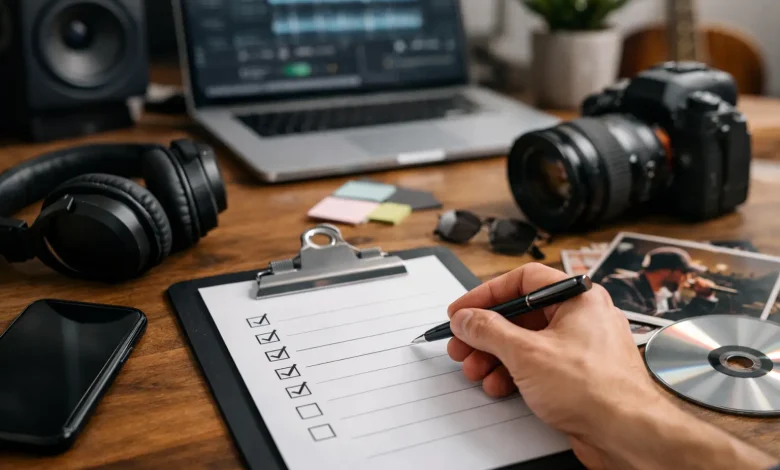
The Artist Branding Checklist
Use this checklist before you invest heavily in content, visuals, or paid promotion. You do not need a massive budget to get these basics right, but you do need consistency.
- Artist promise: One or two sentences that explain your sound, energy, and what fans get from following you.
- Visual direction: A repeatable mix of colors, fonts, photo treatment, wardrobe, locations, and cover art style.
- Artist story: A short, honest narrative about where you come from, what drives your music, and what you are building.
- Voice and language: The way you write captions, speak on camera, interact with fans, and describe your records.
- Professional assets: Current press photos, a clean logo or wordmark if needed, platform banners, bios, and high-quality music links.
- Release identity: A plan for how each single, video, or project connects to your larger artist world without looking identical.
- Fan pathway: Clear places for people to follow, stream, join your email or text list, and stay connected after hearing a song.
Treat this as a working document, not a one-time assignment. Your brand can evolve as your music improves. The goal is not to trap yourself in one aesthetic. The goal is to stop changing direction every week because you have no center.
Make Your Visuals Recognizable, Not Expensive
Independent artists often think branding requires designer clothes, a huge video budget, or a complicated logo package. Those things can help, but consistency usually beats cost.
Choose a visual system you can realistically maintain. If moody flash photography, grainy camcorder clips, and black-and-red graphics fit your sound, use them across your cover art, short-form content, banners, and release flyers. If your music feels bright and playful, lean into color, movement, and open settings. Fans should feel a connection between the song they hear and the image they see.
Your artist photo matters more than many artists realize. It is often the first thing editors, playlist curators, promoters, and potential fans see. Use a clear image that matches your current music era. Avoid old photos that represent a version of your career you have already outgrown.
There is a trade-off here. Over-designing every post can make your page feel stiff, while posting random visuals can make it feel forgettable. Build a recognizable foundation, then leave room for personality. A behind-the-scenes clip can be rougher than your cover art and still feel on-brand if your attitude, setting, and message are consistent.
Create a Bio That Gives People a Reason to Care
Your bio should not read like a résumé. Nobody needs your full life story in 150 words. They need a fast reason to press play.
Lead with your genre or sonic lane, then add the detail that separates you from the crowd. Instead of calling yourself “an upcoming rapper from Atlanta,” say what kind of rapper you are and what your music delivers. For example: “Atlanta rapper blending sharp street storytelling with bass-heavy records made for the night shift.” That creates a picture.
Keep a short version for social profiles and a fuller version for press opportunities. Both should be current, easy to read, and written in your own voice. If you have a real milestone, such as opening for a notable artist, earning major local support, or hitting a meaningful streaming number, include it. Just do not fill your bio with claims that cannot be backed up.
Let Your Content Prove the Brand
A strong brand is not something you announce. It is something people notice through repetition.
Build content around a few dependable themes. You might share performance clips, studio moments, lyric breakdowns, lifestyle content, fan reactions, creative process, or opinions that reflect your point of view. The right mix depends on your personality. A reserved artist does not need to become a daily vlogger. You can be private and still be present by showing the music-making process, your visual world, and selective moments that give fans context.
Every piece of content should have a job. Some posts build awareness by introducing your sound. Others build connection by showing the person behind the music. Some should drive action by sending people to a new single, video, show, or fan list. If every post is simply “stream my song,” followers will tune out. Give them a reason to care before asking them to click.
Pay attention to what people repeat back to you in comments and messages. If fans consistently call your sound “late-night music,” “gym music,” or “music for getting through it,” that language is valuable. It may reveal the brand you are already creating better than your own first draft.
Connect Branding to Every Release
Your music release should feel like an event inside your artist world, not a random file added to streaming platforms.
Before release day, decide what the song represents. Is it the start of a new era? A fan-focused loosie? A personal statement? A high-energy record designed to introduce your sound to new listeners? That answer should shape the visual teaser, captions, content angle, and promotion plan.
Keep the central identity consistent, but let each record have its own personality. If every cover uses the same colors, pose, and layout, fans may struggle to see why this release is different. A useful approach is to keep two or three brand anchors, such as your color palette, typography, or photo style, while changing the mood around the specific song.
This is also where promotion becomes more effective. Paid exposure can put your music in front of people, but branding helps those people recognize why they should stay. Whether you are pitching content, running ads, or using a platform such as TuneBlast to create additional release visibility, your profile and creative assets need to make a strong second impression.
Audit Your Artist Presence Before You Push Harder
Search your artist name and review your major profiles as if you were a new fan. Is the same artist photo used where it should be? Are your bios aligned? Do your latest posts reflect the music you want people to hear now? Is there a clear path from discovery to following you?
Fix the obvious gaps first. Update broken bios, remove outdated links, refresh old headers, and pin content that introduces your strongest current release. Then look for bigger disconnects. If your music sounds premium but your cover art looks rushed, or if your content is funny and casual while your songs are deeply serious, decide whether that contrast is intentional. Contrast can work. Confusion does not.
Do not wait until you have a major label budget to become recognizable. Build the version of your artist brand that is true to your music right now, show it consistently, and let every release add another reason for fans to believe in where you are headed.
Ready to Promote Your Next Release?
If you're serious about getting your music in front of real listeners, we can help.