
A new single drops at midnight. By 10 a.m., you need more than a post sitting in the feed hoping the algorithm feels generous. You need a direct line to people who already raised their hand for your music. That is where email blasts versus text blasts becomes a real release-strategy decision, not just a marketing debate.
Both channels can help independent artists drive streams, sell tickets, announce videos, and turn casual listeners into fans. But they do different jobs. Text is built for speed and immediate action. Email gives you more room to tell the story, show the visual world around a release, and build a relationship that lasts past one campaign.
The strongest artists do not treat either channel as a magic button. They use each one with a clear reason, a clean audience list, and a message worth opening.
Email Blasts Versus Text Blasts: The Core Difference
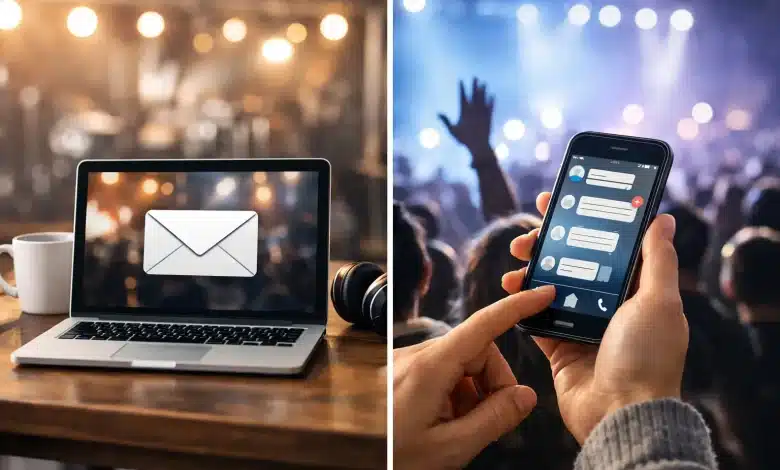
An email blast is a message sent to a group of subscribers through email. It can include artwork, embedded visuals, release context, multiple calls to action, and a more developed message. For an artist, it might announce a new EP, share a behind-the-scenes note, invite fans to a listening party, or direct supporters to merch and ticket pages.
A text blast sends an SMS message to people who have opted in to receive texts from you. It is short, personal, and designed to be read fast. A well-timed text can put a new music video, ticket drop, or limited merch release directly in front of a fan while the moment is still hot.
The difference is not simply that one is long and one is short. It is about attention and intent. Email lets fans slow down and engage with your world. Text asks them to take one action now.
That makes text especially powerful for time-sensitive moments. If your show tickets go live at noon, a text at 11:55 a.m. can create urgency. If your song has been out for two weeks and you want to explain what inspired it, introduce a collaborator, and direct people to a performance clip, email gives that message room to breathe.
When Email Blasts Make More Sense
Email is a valuable home base for your fan communication because it is flexible and owned by you. Social platforms can limit reach, change features, or bury a post without warning. An email list gives you a way to reach supporters without depending entirely on a feed.
For music campaigns, email performs best when there is a story behind the click. Think album announcements, tour recaps, early-access offers, release-day letters, fan club updates, and monthly roundups of what you have been creating. It is also a better format when you need to give fans choices. One email can point them to the new track, music video, ticket page, and social profile without feeling rushed.
Email is generally less intrusive than text, which means you can communicate more often without exhausting your audience. That does not mean sending filler. A fan who joins your list wants a reason to stay. Give them something beyond the same streaming link they saw everywhere else: a short voice note, a lyric breakdown, a first look at cover art, a personal update from the road, or early access to a drop.
For emerging artists with a smaller list, that personal angle is a major advantage. You do not need 100,000 subscribers to get results. A few hundred people who genuinely care can become your first buyers, show attendees, and word-of-mouth team.
Email works well for longer campaign arcs
A release is rarely a one-day event. Email supports the full arc: tease the project, introduce the concept, announce the date, send the release-day message, follow up with a video or live performance, then keep the music alive with fresh angles.
It also gives you useful signals. Open rates can show whether your subject line earned attention. Clicks can show whether fans care more about the video, the song, or the ticket offer. Over time, those patterns help you make better decisions about what to promote and how to frame it.
When Text Blasts Win
Text blasts are about immediacy. People tend to see texts quickly, which makes SMS a high-impact channel when timing matters. A simple message such as, “My new visual is live. Watch before tonight’s premiere,” can create a fast spike in traffic because there is little friction between seeing the message and taking action.
For artists, text is strongest around moments with a deadline or limited supply. Ticket on-sales, venue changes, merch restocks, surprise drops, RSVP reminders, contest deadlines, and live-stream alerts are all natural fits. It can also work well for release day, especially if you give fans one clear destination instead of a crowded menu of options.
The trade-off is that text carries more weight. Fans guard their phone notifications closely. If every minor update arrives as a text, your messages can start to feel like noise. A text list should be treated like backstage access, not a megaphone you use whenever you are bored between posts.
Keep the copy tight. Lead with the action, make the benefit obvious, and avoid trying to cram your full artist biography into 160 characters. The best text messages sound human, direct, and specific.
Text requires stronger permission and better timing
Only text people who have clearly opted in to receive messages from you, and make it easy for them to stop receiving them. SMS marketing is subject to rules around consent and opt-outs, so do not add numbers collected from a guest list, personal contacts, or old fan data without permission. Respecting consent protects your audience and your reputation.
Timing matters, too. A midnight release text might work for an artist whose fans are active late, but it could annoy a broader audience. Know where your audience lives, when they engage, and what kind of news justifies a notification. One focused text can outperform five scattered ones.
The Best Choice Depends on the Goal
If your goal is to tell a deeper story, nurture fans over time, or promote several assets in one message, choose email. If your goal is to create immediate action around one urgent moment, choose text.
For example, an artist releasing a seven-track project could send an email the day before release explaining the project’s theme, sharing the tracklist, and inviting fans to pre-save or set a reminder. On release day, they could send one text directing fans to the project. A few days later, another email could spotlight a fan-favorite record and share a performance clip.
That sequence is more effective than blasting the same link through both channels at the same time with no plan. Your fans may be on both lists. Give each message a distinct purpose so the experience feels coordinated rather than repetitive.
Build Lists Before You Need Them
The biggest mistake artists make is waiting until release week to think about direct outreach. List building should happen year-round, at shows, through your social content, in video descriptions, through fan giveaways, and wherever listeners are already discovering your work.
Offer a real reason to join. Early access to unreleased music, private listening sessions, discount codes, exclusive merch, or first notice on local shows can all work. The offer should match your audience. A touring artist may get more text signups by promising presale codes, while a developing artist may get more email signups through unreleased demos and personal updates.
Do not buy lists or chase random contacts. A smaller, permission-based list will outperform a large audience that never asked to hear from you. Quality creates momentum. Quantity without interest creates unsubscribes, complaints, and wasted promotion dollars.
Make Every Blast Feel Like It Came From an Artist
Your communication should sound like you, not a generic brand template. If your music is raw and conversational, write that way. If your project has a cinematic, polished world, let the visuals and language reflect it. Consistency helps fans recognize your identity before they even press play.
Before you send, ask one question: what should this fan do next? Stream the song, buy the ticket, watch the video, reply with their favorite lyric, or claim early access. One main action makes the message easier to understand and easier to measure.
Services such as TuneBlast can help artists put more promotional power behind a release, but direct fan communication remains one of the smartest assets you can build. It gives your campaign a foundation beyond a single post or placement.
Your next release does not need a louder message. It needs the right message in the right place. Use email to bring fans into the story, use text when the moment needs urgency, and give supporters a reason to keep showing up for what comes next.
Ready to Promote Your Next Release?
If you're serious about getting your music in front of real listeners, we can help.