
Release day can feel like a blur. You spend weeks or months perfecting the record, teasing snippets, setting up cover art, and building anticipation, then the song finally drops and the question hits hard: what should happen today, and in what order? A strong release day promo checklist keeps you from wasting that first 24 hours, when attention is highest and every post, text, and stream can help push your momentum forward.
The biggest mistake independent artists make on release day is treating the drop like the finish line. It is not. It is the starting gun. If your song goes live at midnight and your first real promo move does not happen until late afternoon, you have already lost valuable energy. Fans, playlist curators, bloggers, and casual listeners respond best when your release feels active, visible, and worth paying attention to right away.
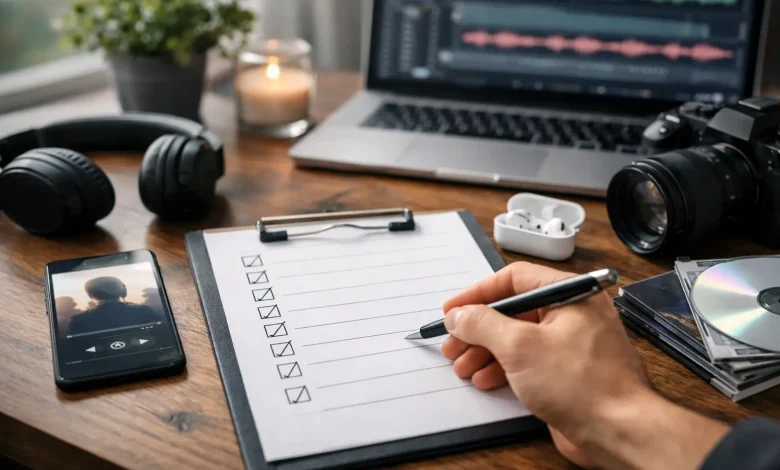
Your release day promo checklist starts before the first post
The best release days are usually won the night before. That does not mean spamming your audience at 11:59 PM. It means making sure your assets, links, captions, and content are ready so you can move fast without sounding rushed.
Before release day begins, confirm your streaming links are working, your smart link is updated, and your social bios point people to the new record. Double-check that your artwork matches across platforms and that your song title is written the same way everywhere. Small inconsistencies look minor, but they create friction when listeners are trying to find your music.
You also want your rollout content loaded up in advance. That includes your main announcement post, short-form video clips, story graphics, behind-the-scenes footage, and a text or email draft for your core supporters. If you are creating everything on release day, you are already behind.
Hit your core audience first
When the song is live, do not begin by trying to reach everybody. Start with the people most likely to care now. Your early engagement matters because it creates the first wave of social proof around the release.
Text your close supporters, fan list, or community first. If you have an email list, send a clean message with one clear call to action: stream the song, save it, and share it. If you have a smaller audience, that is fine. A focused response from 100 real supporters can do more for momentum than a broad post that reaches people who barely know your name.
This is also where tone matters. Release day messages should feel personal and direct, not corporate. People connect with energy, confidence, and a reason to care. Tell them the song is out, tell them what it means, and tell them exactly what you want them to do next.
Make your first social post count
Your main release post should do more than announce availability. It should sell the moment. That means pairing the drop with a strong visual, a clean caption, and a clear action.
On Instagram, X, TikTok, YouTube Shorts, and Facebook, your first post should make it obvious that the song is live now, not later. Use a visual or clip that matches the track’s energy. If the record is emotional, your post should not feel random or overhyped. If the record is high-energy, the content should move like it. Alignment matters.
Keep the caption simple. Name the song, tell people it is out now, and give a reason to tap in. You do not need a paragraph explaining your creative process unless that story is genuinely compelling. Often, a strong one-liner and a direct ask perform better.
Stories deserve special attention here. Story posts are fast, repeatable, and perfect for reminders across the day. Use them for streaming links, fan reposts, quick reactions, and snippets that make the release feel alive.
Use short-form video like a traffic source
If you are serious about growth, release day cannot rely on one static flyer post. Short-form video is one of the fastest ways to turn a release into discovery.
Post multiple video variations, not just one. One can be performance-based. Another can use the strongest lyric moment. Another can frame the song around a relatable caption or trend-adjacent angle. The point is not to look busy. The point is to give the track more than one chance to connect.
There is a trade-off here. Overposting low-effort clips can make the drop look desperate. Underposting makes it easy to disappear. The sweet spot is usually a few focused pieces of content that each have a distinct angle and feel native to the platform.
Build momentum with your network
A smart release day promo checklist includes other people, not just your own pages. Reach out to collaborators, producers, featured artists, engineers, videographers, and friends who genuinely support your work. Ask them to share the release in a way that feels natural to them.
Do not send the same cold copy-and-paste message to everybody. Give them what they need to post quickly: cover art, streaming link, a short caption option, and maybe a video clip. The easier you make it, the more likely they are to help.
This is also the time to repost support publicly. When fans, peers, or creators share your record, put that on your stories. It gives the release more life and shows people that others are paying attention.
Treat streaming actions differently from passive listens
Not all engagement helps equally. On release day, you want more than random plays. You want saves, playlist adds, shares, repeat listens, and watch time if there is a video attached.
That means your messaging should not only say stream it. Ask listeners to save the song, add it to a playlist, and send it to one friend. These actions signal stronger intent and can help extend the life of the release beyond the first day.
If you are pushing on YouTube, watch time matters more than quick clicks. If you are focused on Spotify, saves and repeat listens matter a lot. Every platform rewards different behavior, so shape your ask accordingly instead of using the same generic promo language everywhere.
Keep the release moving all day
One post in the morning and silence for the next ten hours is not a release strategy. It is a missed opportunity.
A strong release day has waves. Your first wave is the announcement. Your second wave can be a performance clip, fan reaction, or a personal on-camera message. Your third wave might highlight lyrics, behind-the-scenes context, or a visualizer. By evening, you should still be giving people a reason to check the song out if they missed it earlier.
This does not mean posting every hour. It means staying present enough that the release feels active. Different parts of your audience are online at different times, so repetition is useful when it is presented through fresh angles.
Paid promo works best when the foundation is already active
If you are putting money behind a release, make sure your organic rollout looks alive first. Paid traffic can amplify attention, but it does not fix weak messaging or empty-looking profiles.
This is where artist-focused platforms like TuneBlast can make sense, especially if you need extra reach beyond your own following. But promotion works better when there is something to amplify: live posts, a credible artist page, active stories, and content that gives new listeners a reason to stay. Paid exposure without release-day structure often turns into wasted spend.
It also depends on the stage of your career. If you are building from scratch, broad awareness may be the goal. If you already have traction, you may want to focus on retargeting warm listeners, driving video views, or supporting a bigger content run after the song lands.
Watch the data, but do not panic too early
Release day numbers matter, but they can also mess with your head if you stare at them every five minutes. Check performance with purpose.
Look at which posts are getting shares, which video angle is holding attention, and where the strongest traffic is coming from. If one clip is clearly outperforming the others, make another version in that lane. If your audience is reacting more on Instagram than TikTok, lean into that. Data is not there to flatter you. It is there to help you adjust.
At the same time, do not declare a release dead by dinner time. Some songs hit fast. Others build over days or weeks through repetition, user content, and late discovery. Release day is huge, but it is not the only day that matters.
Keep something in reserve
A lot of artists use all their content in the first 12 hours and then have nothing left for the next week. That is a mistake. A good release day promo checklist creates momentum without burning through every asset immediately.
Hold back a few strong pieces. That could be a second verse performance clip, a mini interview, a live rehearsal take, a fan response montage, or a stripped version of the hook. If the song starts gaining traction, you will want more fuel. If it starts slower, you will need more chances to push it.
Release day should feel like the beginning of a run, not a one-day event. The artists who grow are usually the ones who know how to stretch attention, not just spark it.
The goal is not to look busy. The goal is to make your release impossible to ignore for the people most likely to care. If you build your release day around timing, clarity, and real audience action, you give your music a better shot at turning noise into traction.
Ready to Promote Your Next Release?
If you're serious about getting your music in front of real listeners, we can help.