
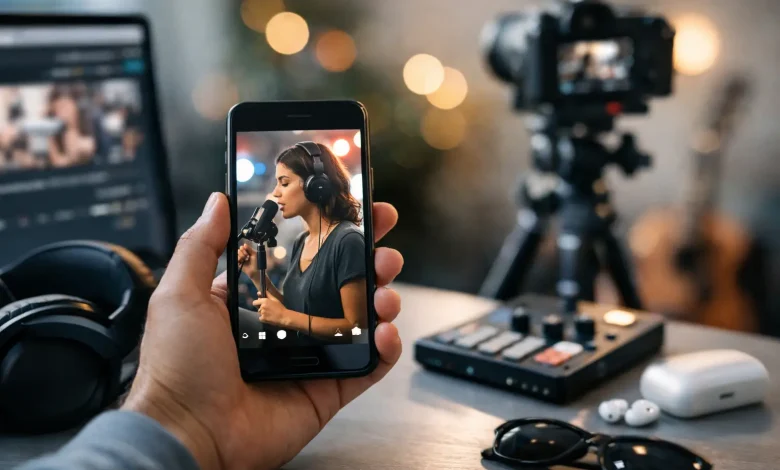
A lot of artists post a clip, add their song, wait three days, then assume short form video music promotion is overrated. Usually, the problem is not the format. It is the expectation. Short videos can move a record fast, but only when the content matches how people actually watch, scroll, replay, save, and share.
For independent artists, that matters because short-form platforms reward attention before reputation. You do not need label-level pull to get traction. You do need a clear angle, strong creative choices, and enough consistency to give your music multiple chances to connect.
Why short form video music promotion matters
Short-form content has become one of the fastest ways to put a song in front of new listeners. Not because every post goes viral, but because the format compresses discovery. A potential fan can hear your hook, see your face, catch your energy, and decide whether they care in under 15 seconds.
That speed changes the game for emerging artists. A great song used to depend heavily on gatekeepers, bigger media placements, or a long grind of audience building before real momentum showed up. Now a smart clip can create immediate curiosity. That curiosity can lead to streams, profile visits, followers, saves, comments, and user-generated content if the record gives people something they want to participate in.
There is a trade-off, though. Short-form platforms are incredible for discovery, but discovery is not the same as fandom. If your content gets attention without building connection, you can end up with views that look exciting and do not move your career much. The goal is not just reach. The goal is reach that turns into repeat listening.
What artists get wrong about short form video music promotion
The biggest mistake is treating every video like an ad. People rarely open these apps hoping to be marketed to. They want to feel something first. They want entertainment, relatability, curiosity, style, tension, humor, or a moment worth replaying.
That means your song cannot just sit under random footage with text that says out now. Sometimes that works if the record is already hot. Most of the time, it does not. The video needs a reason to exist beyond announcing the release.
Another common mistake is posting one type of clip over and over. If every video is you lip-syncing in the car or standing in front of a mic with the same 12-second snippet, the audience gets nothing new. Repetition helps when it reinforces a strong idea. It hurts when it shows a lack of one.
Artists also overestimate virality and underestimate volume. A single winning post can change things, but most growth comes from testing. Hooks, captions, scenes, snippets, and story angles all affect performance. The artists who win are usually the ones who treat content like a campaign, not a lottery ticket.
The content angles that actually move songs
The strongest short-form campaigns usually build around one of a few proven angles. Performance still works, especially when the artist has presence. That can mean direct-to-camera delivery, live-feel vocals, studio sessions, crowd footage, or stripped-back versions that make the record feel real.
Story also works. If there is a backstory to the song, a funny moment behind the lyrics, or a situation listeners instantly recognize, that can create a stronger connection than a generic promo clip. People do not just share songs. They share context that makes the song hit harder.
Reaction-driven content is another strong lane. That might be showing friends hearing the track for the first time, capturing a crowd response, or building a clip around a line that gets people commenting. Social proof matters, especially when you are still earning trust.
Then there is identity content. This is where artists in hip-hop, afrobeats, pop, R&B, country, and alternative can all win differently. A song can spread because it fits a lifestyle, a mood, an aesthetic, or a personality type. Sometimes fans connect with what the music says about them as much as the music itself.
How to choose the right song snippet
Not every best part of a song is the best part for short-form video. That is a hard truth for artists who are deeply attached to the full record. The section that performs best on short-form platforms is usually the one that creates instant tension or payoff.
That might be the hook, but not always. It could be the first line of the verse, a beat switch, a punchline, a melodic lift, or a moment with strong emotional clarity. If listeners need 35 seconds of setup before the song gets interesting, the clip probably will not carry the weight.
It helps to test multiple snippets from the same track. One may connect emotionally. Another may trigger comments. Another may get better completion rates because it starts stronger. This is where strategy beats ego. Let the audience show you which part of the song opens the door.
Building a campaign instead of posting randomly
The artists who get real traction from short-form do not rely on one-off content. They create a run. Before release, they seed anticipation with previews, studio moments, teaser captions, and clips that introduce the feeling of the record. Around release day, they shift into stronger calls for listening, reactions, and repeat exposure. After release, they keep pushing with fresh concepts instead of disappearing after one weekend.
This matters because songs often need time to click. One person may scroll past your first three videos and stop on the fourth because the framing is better. Another may hear the track several times before checking your profile. Repetition builds familiarity, and familiarity is often what turns passive viewers into active listeners.
A campaign also gives you better data. If you post ten different creative variations, you can start seeing patterns. Maybe direct-to-camera clips outperform polished edits. Maybe fans respond more to lyrics than vibe shots. Maybe one line consistently gets quoted in comments. That is useful information you can build on across the whole release cycle.
Production quality matters less than clarity
A lot of independent artists hold back because they think they need expensive visuals for short-form content. You do not. Clean audio, decent lighting, and a clear concept matter more than fancy production.
What kills performance is confusion. If the viewer cannot tell what they are watching, why it matters, or what they are supposed to feel within the first second or two, the post is in trouble. A simple clip with a strong opening usually beats a polished video with no clear point.
That said, low effort is different from low budget. Short-form audiences are forgiving about production, but they are not forgiving about laziness. If the clip feels rushed, off-brand, or disconnected from the energy of the song, people move on.
How short-form video turns into real artist growth
The best short-form video music promotion does more than spike views. It creates pathways. A viewer hears the song, visits your profile, watches more content, follows, searches the track, adds it to a playlist, or sends it to a friend. That chain reaction is where momentum starts to look like career growth.
This is why your artist identity needs to be legible. If someone lands on your page after seeing one strong clip, they should quickly understand your sound, your personality, and your world. If your content is all over the place, the initial attention may not convert.
It also helps to think beyond the platform itself. Short-form can be the spark, but your release strategy should still support it with smart distribution, artist branding, and consistent follow-up. Promotion works best when each piece helps the others. That is part of why platforms like TuneBlast focus on momentum rather than one isolated tactic.
What to measure without getting distracted
Views matter, but they are not the only signal. Saves, shares, profile visits, comments, follower growth, and repeat content performance tell a deeper story. A video with moderate reach and strong conversion can be more valuable than one with huge reach and weak listener intent.
Pay attention to what kind of attention you are getting. Are people quoting lyrics back to you? Asking for the release date? Using your sound? Tapping into your artist page? Those are stronger signs than empty impressions.
It also depends on your stage. If you are early in your career, short-form success may look like building recognition around your name and sound. If you already have some traction, success may mean using content to drive a bigger streaming week or support a broader campaign. The numbers worth chasing change with your goals.
Short-form video is not magic, and it is not fluff. It is a high-speed test of whether your music, message, and presentation connect fast enough to earn a second look. When you treat it with intention, it can do more than promote a song. It can teach you how your audience responds, where your strongest creative angles are, and what kind of momentum your music is actually ready to carry. Keep posting with purpose, keep testing what hits, and let the market show you where the next breakthrough starts.
Ready to Promote Your Next Release?
If you're serious about getting your music in front of real listeners, we can help.